
Namrata "Nimi" Gandhi
I help developers, hospitality brands, wellness concepts, cultural destinations, and visionary founders design human-centered experiences from concept to scale. Drawing from UX/UI design, behavioral psychology, hospitality, wellness, and community building, I help transform ideas into environments, systems, programming, and communities people want to be part of.

Experience designer, community builder and cultural programmer. A decade of leading hospitality, wellness and cultural projects across three continents.
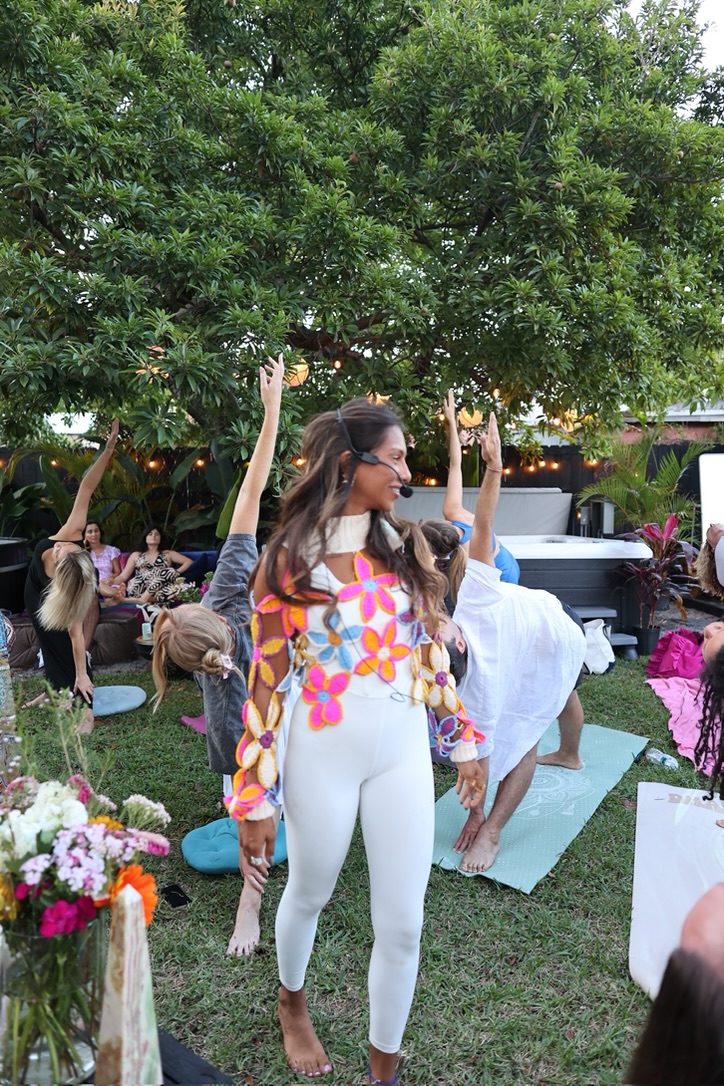
Origins of Emotional Architecture™
A path made of unlikely disciplines.
Each chapter contributed a different layer — material, digital, philosophical, cultural, architectural, communal. Together they became a method.
Chapter 01
Art History & Conservation
How civilizations use architecture, symbolism and ritual to create meaning.
Chapter 02
UX/UI Design
How intentional design shapes behavior, emotion and decision-making.
Chapter 03
Yoga & Philosophy Studies in India
The deeper questions beneath all experience — what people are truly seeking.
Chapter 04
Experiential Retail NYC
How a brand becomes a world people can enter, share and belong to.
Chapter 05
iii Points Miami
How culture and collective energy create belonging among thousands of strangers.
Chapter 06
Society / PMG
Programming as a leasing and loyalty strategy inside hospitality and real estate.
Chapter 07
Superblue Miami
Moving people from observation to participation through immersive, shared experience.
Chapter 08
Dharma Healing
The living laboratory — yoga, music, healing, design and community under one roof.
Chapter 09
Emotional Architecture™
The methodology behind the feeling.
Biography
Namrata "Nimi" Gandhi is a yogi, experiential strategist, community architect, and founder of Dharma Healing whose work explores the emotional psychology behind why people gather, connect, return, and belong.
For over a decade, her work has existed at the intersection of hospitality, real estate, wellness, music, culture, and experiential design. From experiential retail activations in New York City to community-led real estate concepts in Miami, immersive art environments, music festivals, destination programming, retreats, and wellness ecosystems around the world, she has spent years studying how physical spaces become emotionally meaningful places.
Her perspective is shaped by an unusual combination of disciplines.
She studied Art History and Conservation, where she became fascinated by how civilizations have used architecture, symbolism, ritual, and gathering spaces to create meaning, identity, and collective memory for thousands of years. She later studied UX/UI Design, learning how intentional design influences behavior, emotion, decision-making, and human interaction. This introduced her to the idea that every environment, physical or digital, is ultimately shaping an experience.
Alongside her academic studies, Nimi spent years immersed in yoga, meditation, philosophy, and traditional Eastern teachings, training extensively in India and Southeast Asia. Through these traditions, she became interested in a deeper question:
Why do people gather in the first place?
What creates belonging?
What creates transformation?
What makes people return?
Those questions became the foundation of her work.
Over the years, that curiosity led her through experiential retail, cultural festivals, hospitality, real estate, immersive art, wellness, retreats, music, and community building. While the industries looked different, the underlying challenge remained the same:
How do we create environments that people don't just visit, but genuinely feel connected to?
Alongside her consulting work, Nimi founded Dharma Healing, a living laboratory for Emotional Architecture and one of her most ambitious community-building projects to date.
What began as a residential home in Miami was transformed from the ground up into a wellness and cultural destination. Nimi redesigned the property into an urban oasis featuring a custom sauna, cold plunge, hot tub, yoga shala, healing rooms, communal gathering spaces, and an environment intentionally designed to foster connection, healing, and belonging.
Drawing from her background in hospitality, events, yoga, consumer psychology, and community building, she developed an entire ecosystem around the space. Daily classes, weekly rituals, monthly events, workshops, retreats, healing arts, music experiences, philosophy discussions, breathwork sessions, sound healings, and community gatherings were designed to create consistent opportunities for meaningful connection.
Dharma Healing became a platform for both internationally recognized artists and emerging local practitioners. The space hosted conscious music artists and cultural leaders such as Coco & Breezy and Lincoln Jesser while simultaneously providing local healers, teachers, musicians, and facilitators a platform to share their work, build their audience, and grow their impact.
Rather than operating as a traditional wellness center, Dharma Healing functioned as a living ecosystem where programming, hospitality, education, music, healing, and community worked together to create belonging.
Today, her work focuses on helping hospitality brands, developers, wellness concepts, cultural institutions, and destination projects bring people-centered experiences to life.
Her role often extends beyond strategy into concept development, wellness design, programming systems, operational frameworks, facilitator recruitment, community architecture, and long-term growth planning.
From designing wellness amenities and recovery experiences to building programming calendars, hiring teams, creating SOPs, and developing scalable experience ecosystems, she helps transform ideas into living destinations.
She calls this approach Emotional Architecture.
The understanding that the most successful spaces are not simply designed physically.
They are designed emotionally.
Worlds she bridges
- Hospitality
- Real Estate
- Wellness
- Music
- Art
- UX / UI
- Community
- Spirituality
Today
She helps developers, hospitality brands, wellness spaces, cultural institutions and lifestyle businesses design experiences that create emotional connection and measurable value.
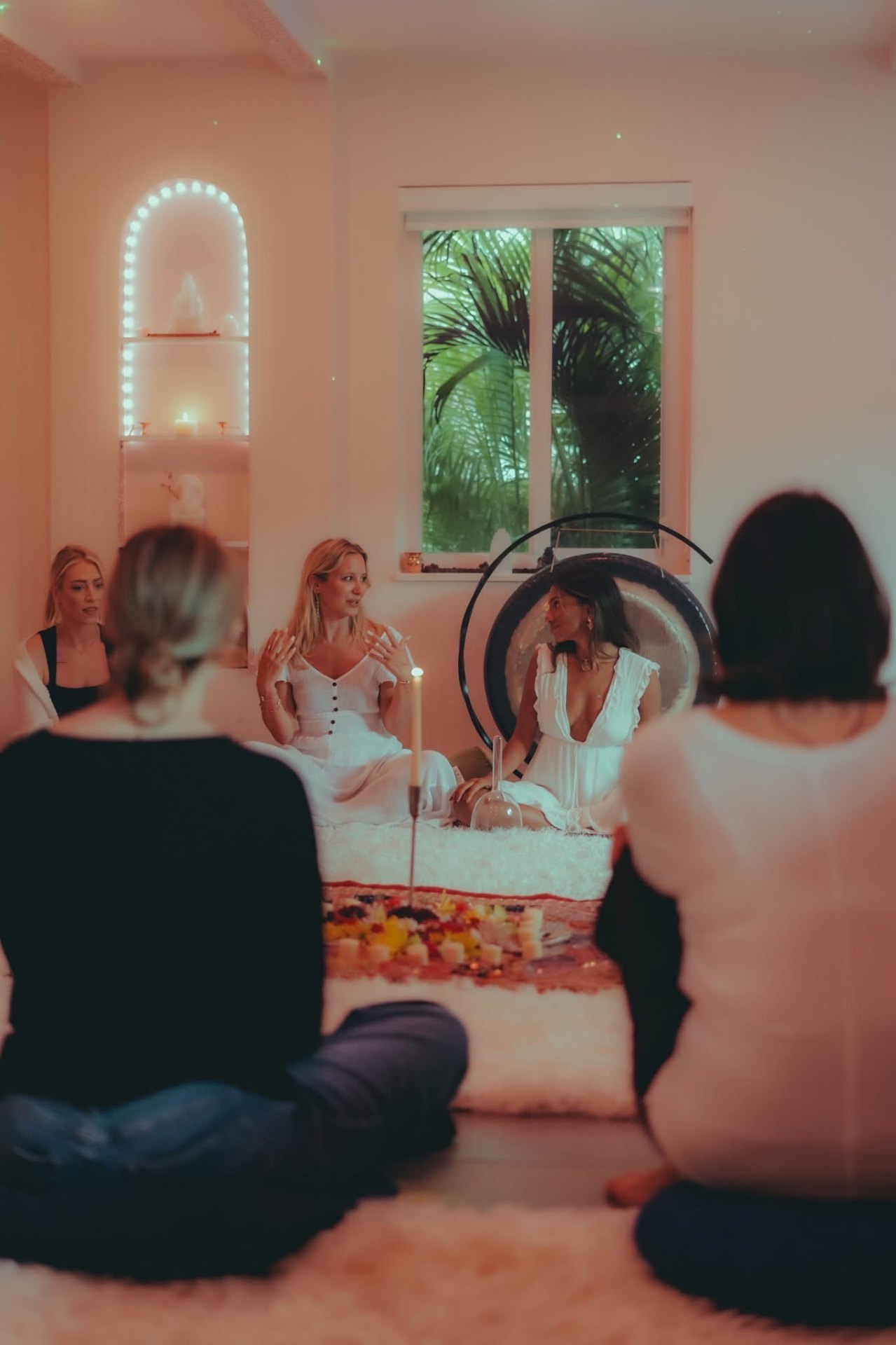
Emotional Architecture™
Her approach is the understanding that the most successful spaces are not simply designed physically. They are designed emotionally.
"We don't design spaces. We design the feelings that live inside them."
— Nimi Gandhi
The Bridge — where strategy meets consciousness
Nimi's work is not only about programming spaces — it's about understanding people. Yoga and Eastern philosophy ground her in human longing, connection and belonging; UX/UI gives her the tools to research, map and refine experience; events, real estate, hospitality and wellness bring it all into the real world.
- research & intuition
- strategy & feeling
- business & belonging
- design & human behavior
Through yoga, she began asking
- What are people seeking?
- What makes them feel safe?
- What creates belonging?
- What creates transformation?
- What makes them return?
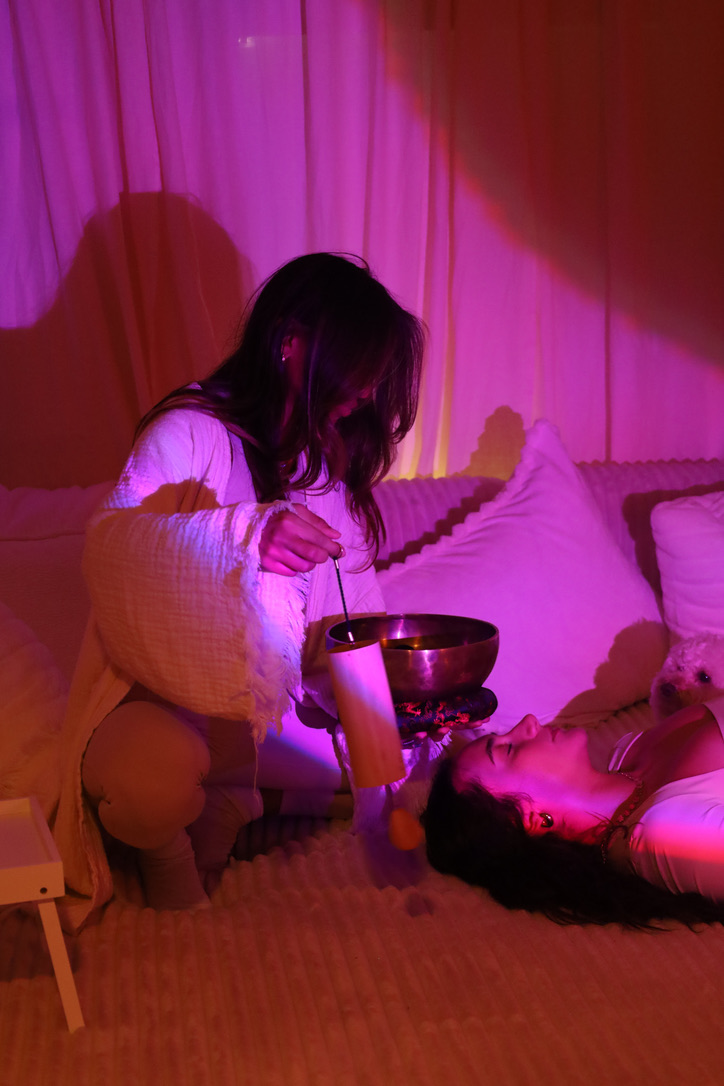
The Intersection
Three worlds, one practice.
Emotional Architecture lives at the overlap of how people behave, how experiences are designed, and how meaning is made.
Human Behavior
Why people gather, what they seek, what makes them stay.
UX/UI Design
Researching, mapping, designing and refining experiences with intention.
Yoga & Philosophy
The deeper questions beneath every experience — meaning, identity, belonging.
At their overlap: a methodology for designing places people return to.
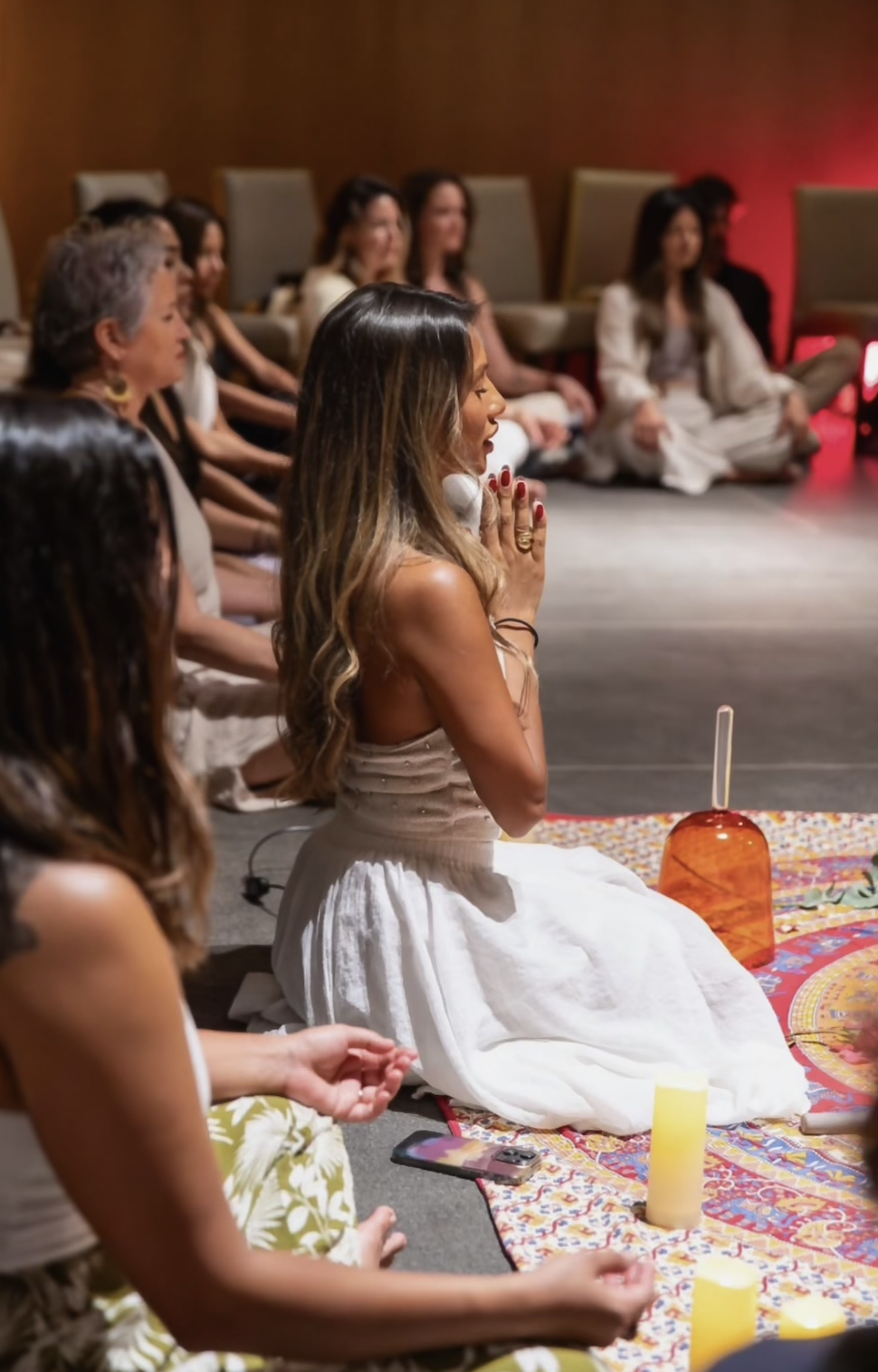
What She Believes
A few working truths.
- 01
A space without programming is passive.
- 02
A brand without community is forgettable.
- 03
An event without strategy is temporary.
- 04
A beautiful environment without emotional connection does not create loyalty.
- 05
People return to places where they feel seen, connected, inspired and part of something larger than themselves.
"The future of hospitality will be defined not by what people consume,
but by what they feel."
— Nimi Gandhi

From the Journal
Thoughts on hospitality, wellness, community, culture, and the emotional architecture behind why people gather.
May 2026
Emotional Architecture: Designing Spaces People Return To
Why the most enduring places are not built from materials alone, but from the feelings they invite, hold, and release.
Read on Medium →March 2026
On Ritual, Hospitality, and the Quiet Power of Gathering
Notes on how small, intentional moments shape the cultural DNA of a wellness space, a hotel, or a community.
Read on Medium →January 2026
Programming as Infrastructure: Beyond the Event
Events end. Systems remain. A reflection on building repeatable programming that turns a property into a destination.
Read on Medium →